
In one clear definition
Children do not become independent when adults disappear. They become independent when adults stay close — without constantly replacing what the child could begin to do, attempt, remember, manage, or tolerate for themselves.
Overhelping happens when adult support arrives too quickly, too fully, or too often in place of the child’s own effort.
It is helping in a way that repeatedly replaces practice, frustration tolerance, responsibility, problem-solving, initiative, and growing capability.
Why loving parents overhelp
Most overhelping does not come from a desire to control. It comes from love mixed with urgency. Parents overhelp because helping is faster, struggle is uncomfortable to watch, distress is hard to tolerate, and they want to protect confidence or prevent failure.
Sometimes parents also overhelp because they are carrying too much already. When the day feels full, rushed, or fragile, it can feel easier to just do it yourself. That makes sense. But what feels easier in the short term can become costly in the long term.
"Every time help replaces effort too early, the child loses one more chance to discover: 'Maybe I could have done more than I thought.'"
What overhelping often looks like
Overhelping is rarely dramatic. It usually appears in ordinary family life. It can look like:
- Zipping the coat when the child is struggling but still trying.
- Answering questions the child could answer themselves.
- Correcting before the child has had time to think.
- Packing the school bag for them every day.
- Solving peer conflict before they attempt their own words.
- Doing part of the task simply because it is faster.
- Rescuing every forgotten item, every small mistake, and every uncomfortable consequence.
None of this looks cruel. Most of it looks caring. That is exactly why it is hard to see.
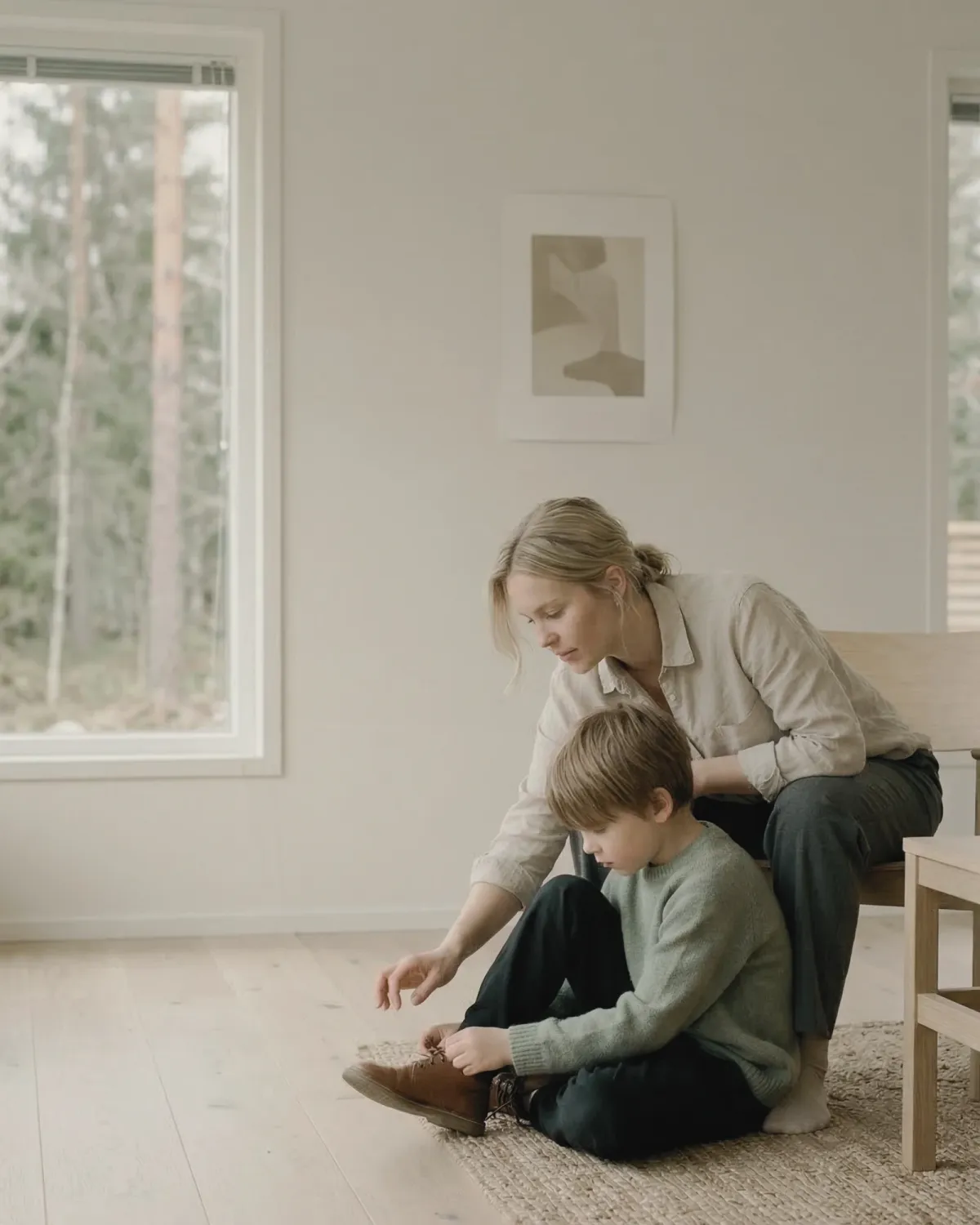
Support and overhelping are not the same thing
This distinction matters. Support strengthens action. Overhelping replaces action. That difference shapes development.
Support
Keeps the child inside the process.
- "Try first. I’m nearby."
- "What do you think comes next?"
- "You’re frustrated, but you’re still capable."
- "I can help a little without taking over."
Overhelping
Removes the child from the process.
- "Here, let me do it."
- "You can’t do this yet."
- "It’s faster if I handle it."
- "You’re too upset, so I’ll take over."
What child independence really means
Independence is not emotional distance, coldness, or pushing children beyond their developmental level. Independence is growing capability, increasing ownership, more internal responsibility, and the ability to act inside connection.
A truly independent child is not a child who needs no one. It is a child who is increasingly able to do, manage, remember, cope, and contribute — while still feeling supported and securely connected. Independence does not grow because adults talk about it. It grows through repetition.
How to tell whether your child needs help or more space
This is one of the most useful questions a parent can ask. Not "Should I help?" but "What kind of help supports growth here?" The key distinction is: Is my child unable — or simply uncomfortable?
Step in more fully when:
- The situation is unsafe.
- The task is truly beyond the child’s developmental ability.
- The emotional state is too intense for learning or functioning to continue.
Pause before stepping in when:
- The task is hard but possible.
- The child is frustrated but still engaged.
- The process is slow, messy, or imperfect rather than harmful.
- The child is capable of trying, even if they may not succeed perfectly yet.
What parents often misunderstand
"If I don’t help, I’m being unsupportive."
Not necessarily. Support does not require takeover. Very often, the most supportive move is to remain present without replacing the child’s effort.
"It’s kinder to make things easier."
Sometimes. But not always. Making things easier in the moment can make independence harder in the long run.
"My child gets frustrated quickly, so I should step in fast."
Quick frustration does not always mean the child is incapable. Sometimes it means the child needs more practice staying inside effort.
"I just want my child to feel successful."
That desire is good. But the deepest kind of success is not being carried to the finish. It is being able to say: "I did more of this myself than I could before."
Has support started drifting into overhelping?
When you can see where your family pattern leans toward overhelping, it becomes much easier to shift toward support that grows independence instead of replacing it. The next useful step is not guilt. It is clarity.
Take the 2-minute Scandinavian Parenting Assessment to identify the pattern shaping your child’s confidence, independence and resilience — and where a calmer, wiser shift can begin.
Take the 2-Minute Assessment