
In one clear definition
At some point, a quiet frustration appears: "Why is it so hard to stay both calm and in charge?" This is where many parents get stuck, feeling torn between being stricter or softer. Neither truly works.
Calm Leadership is the ability to stay warm, steady, and clear — while holding direction without over-negotiation, reactivity, or force.
It is not about being passive, nor is it about controlling everything. It is connection without losing authority, clarity without harshness, and steadiness under pressure.
Why so many parents feel torn
Modern parenting advice often creates a hidden conflict. Parents feel pulled between two extremes, resulting in a middle ground that feels unstable: explaining too much, negotiating too long, and reacting when it finally becomes too much.
The "Soft" Trap
- Fear that being firm hurts the child.
- Validating emotions turns into lack of boundaries.
- Loss of direction and authority.
The "Strict" Trap
- Fear of letting the child "take over."
- Reliance on control and compliance.
- Loss of warmth and connection.
What calm leadership actually is (and isn't)
Calm Leadership is a different foundation: warmth with direction, connection with boundaries, and presence with clarity. A calm leader does not rush into emotional escalation, collapse into endless discussion, or give away direction to avoid discomfort. Instead, they hold the line calmly, stay emotionally available, and move things forward without chaos.
What it is NOT:
- It is not coldness: Calm does not mean distant or emotionally shut down.
- It is not authoritarian control: There is no fear-based compliance.
- It is not permissive softness: Children are not leading the structure of the day.
- It is not endless explaining: Understanding does not require long debates.
- It is not emotional suppression: Feelings are allowed — but they do not decide everything.
"The child’s feelings are welcome, but the adult still holds direction. Both can exist at the same time."
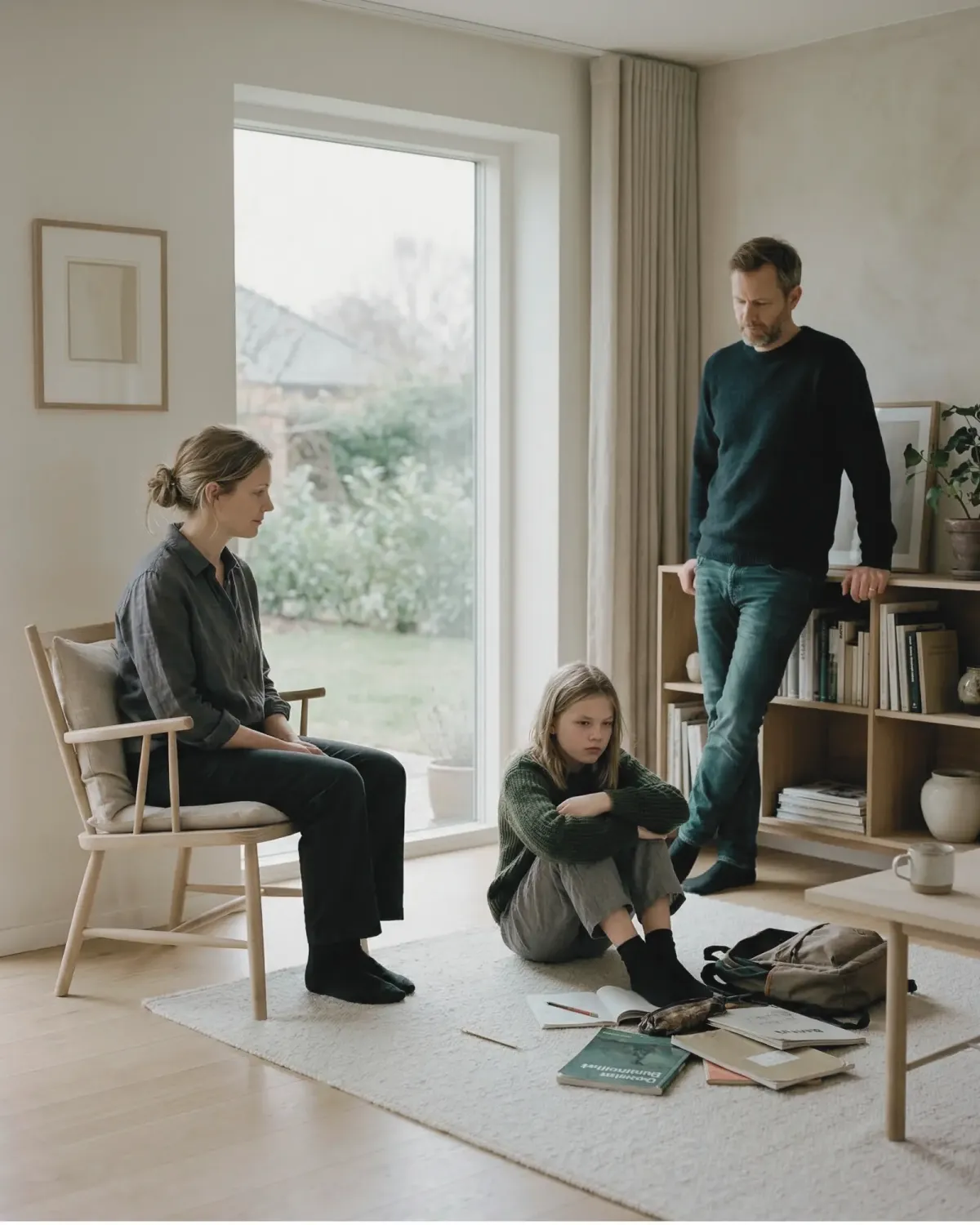
Why children need leadership — not only empathy
Empathy is essential; children need to feel seen and understood. But empathy without direction can create instability. When everything is negotiable, flexible, and dependent on the child’s current state, the world starts to feel unpredictable. And unpredictability increases emotional tension.
Children do not regulate in isolation; they regulate in relationship. When the adult is predictable, grounded, and consistent, the child has something safe to regulate against. Calm Leadership creates less chaos, fewer escalations, and more emotional stability over time.
What calm leadership looks like in daily life
This is where it becomes real. It replaces chaos with clarity:
- Bedtime: Not 10 minutes of negotiation. But: "It’s bedtime. I’m here with you. Let’s go." Calm. Clear. Moving forward.
- Leaving the house: Not repeating and escalating. But: "We’re leaving in two minutes. Shoes on." And then following through.
- When a child refuses: Not arguing or convincing. But: "I hear you don’t want to. We’re still doing this."
- Big emotions: Not shutting them down. But: "I see you’re upset. I’m here." While still holding the boundary.
- Screen time limit: Not long explanations. But: "Time is up." And staying steady through the reaction.
Why over-negotiation creates more conflict
Many parents try to reduce conflict by explaining more, negotiating more, and adjusting constantly. Often, this has the opposite effect. When everything is open to discussion, children push further, boundaries blur, and friction increases. Not because the child is difficult, but because the structure is unclear.
You don’t reduce conflict by being softer. You reduce conflict by being clearer. Calm words without follow-through create confusion. Children learn not from what we say, but from what happens next.
What parents often misunderstand
"If I’m calm, I have to accept everything"
No. Calm Leadership includes clear limits. Emotions are validated, but boundaries remain intact.
"If I don’t explain, I’m not respectful"
Respect does not require long explanations every time. Endless debate often leads to frustration for both parent and child.
"If my child is upset, I should change the decision"
Emotions can be held without changing direction. Your presence offers comfort; your boundary offers safety.
"If I hold boundaries, I’m being harsh"
Warmth and boundaries are not opposites. You are not increasing pressure; you are increasing stability.
Want to see what parenting pattern is shaping your daily interactions?
Leadership in parenting is not dominance or control. It is steadiness under pressure. The ability to stay present, clear, and connected even when things are not easy.
Take the 2-minute Scandinavian Parenting Assessment to understand where your current dynamic sits — and how to move toward calmer, clearer leadership.
Take the 2-Minute Assessment