
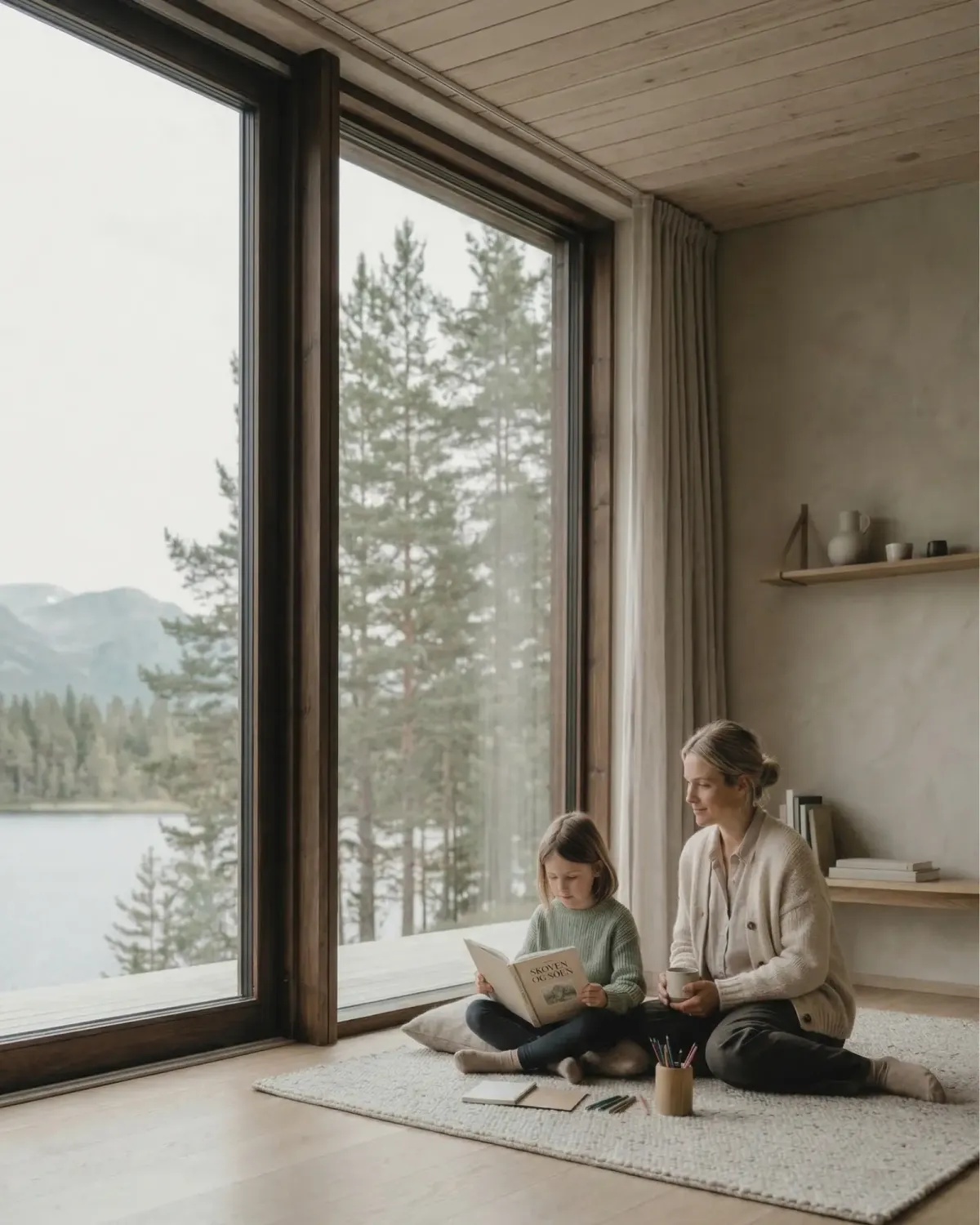
In one clear definition
Scandinavian Parenting is a parenting philosophy and family-life model that combines:
- Calm Leadership: Warmth with clarity, steadiness and direction.
- Safe Struggle: Allowing children to experience manageable effort, frustration and responsibility without rescuing too quickly.
- Real Independence: Helping children become genuinely capable in everyday life, not just emotionally comforted in the moment.
Its goal is not perfect behavior. Its goal is long-term capability.
Why more parents are looking for something like this
Many parents are not looking for more parenting content because they want to become stricter. They are looking because something in family life feels off.
They may be tired of repeating themselves all day. They may feel that everything depends on one adult remembering, planning, regulating, prompting and following through. They may want to be warm and connected, but feel that "gentle" has turned into over-explaining, overhelping or never fully holding a boundary.
This is often where Scandinavian Parenting begins to make sense. It names something many parents feel but cannot easily describe: the difference between a loving family and a family system that quietly creates dependence, overload and unnecessary friction.
"Scandinavian Parenting offers a different model. Not a colder one. Not a harsher one. A clearer one. It asks a deeper question than, 'How do I get through this moment?' It asks, 'What is this pattern teaching my child over time?'"

What Scandinavian Parenting is (and is not)
It assumes that children grow best when they experience three things together: emotional safety and warmth, clear structure and adult leadership, and real opportunities to act, cope, contribute and grow in capability.
Just as important as defining the method is clearing up what it is not:
- It is not permissive parenting. It does not mean endless flexibility or boundaries that disappear when a child resists.
- It is not harsh parenting. It does not rely on fear, emotional force, intimidation or relational distance.
- It is not emotional withdrawal. Children do not become strong because adults become cold. The goal is support without over-rescue.
- It is not an aesthetic identity. It is not about wooden toys or minimalist interiors. It is about how a family functions when real life is happening.
The three core principles
The method is built around three connected ideas. Together, they shape how parents lead and how children gradually become more capable.
1. Calm Leadership
Calm Leadership means warmth with clarity. The adult is not trying to dominate the child, but is also not handing over leadership to the child’s mood or momentary preference. The parent stays present, connected and human — while still holding direction. It is not low energy. It is high clarity.
2. Safe Struggle
Safe Struggle means allowing children to experience manageable difficulty without stepping in too quickly. Confidence rarely grows from constant rescue. More often, it grows from repeated experiences of supported effort. It means asking: Is this hard, or is this harmful? Am I helping because help is needed, or because discomfort is hard for me to witness?
3. Real Independence
Real Independence is not early self-sufficiency for adult convenience. It is the gradual development of true capability in daily life—getting dressed with less prompting, tolerating small frustrations, and needing fewer reminders. This kind of independence grows inside connection, not outside of it.
What this looks like in real family life
This is what makes Scandinavian Parenting feel different in lived experience. It changes the load-bearing structure of the home:
- Morning routines: Instead of the parent becoming the entire executive system of the morning, the family moves toward clearer expectations and more child ownership over time.
- Getting out the door: Instead of negotiating every step, the parent leads more simply and more steadily.
- Homework and tasks: Instead of constant reminders and checking, the focus shifts toward support that builds responsibility rather than replacing it.
- Boundaries: Instead of either escalating or endlessly discussing, the parent becomes clearer, shorter and calmer — without disconnecting emotionally.
Common questions about the method
Is Scandinavian Parenting the same as gentle parenting?
Not exactly. There is overlap in the emphasis on emotional respect, connection and reduced shame. But Scandinavian Parenting places stronger emphasis on adult leadership, real-life responsibility, sustainable family structure and the developmental value of manageable struggle.
Is Scandinavian Parenting permissive?
No. Permissive parenting tends to weaken structure and reduce adult leadership. Scandinavian Parenting does the opposite. It values warmth and respect, but also clarity, steadiness and direction.
Does it mean giving children more freedom?
It means giving children more developmentally appropriate responsibility and agency, not unlimited freedom. Freedom without structure can feel unstable. Responsibility inside stable structure helps children grow.
Can this approach help with confidence?
Yes — especially because it treats confidence as something built through lived capability, not just praise. Children tend to develop stronger confidence when they are supported, trusted and given repeated opportunities to act, cope, contribute and recover.
Want a clearer view of your family’s current pattern?
Take the 2-minute Scandinavian Parenting Assessment to see what may be shaping your child’s confidence, resilience and independence — and where a calmer, more effective shift could begin.
Take the 2-Minute Assessment