
In one clear definition
Some parents try to build independence through pressure. Others protect their child from everything that feels difficult. Many move between the two — wanting independence, but unsure how to support it without becoming harsh or distant. In that uncertainty, children stay more dependent than they need to be, not because they are incapable, but because they have too few chances to discover what they can actually do.
Independence in children is the gradual growth of capability, responsibility and self-trust within a secure relationship.
It is a process where children do more for themselves over time, take increasing ownership, build confidence through real experience, and develop internal responsibility—while still feeling supported, connected, and safe.
What independence actually is — and what it is not
This is a critical distinction. Many parents unknowingly reject independence because they associate it with emotional distance. A truly independent child is not a child who needs no one; it is a child who is increasingly able to manage and cope while still feeling securely connected to the adult.
Independence is NOT:
- Emotional distance or coldness.
- "Figure it out alone."
- Pushing children too far, too fast.
- Expecting adult-level responsibility too early.
- Removing support.
Independence IS:
- Growing capability and increasing ownership.
- Internal responsibility and follow-through.
- Self-trust built through experience.
- Acting within connection, not outside it.
How independence gets blocked
Most children are not lacking independence because they cannot develop it. They are lacking independence because the system around them does not require it enough. Independence gets blocked when:
- Adults anticipate every need.
- Reminders replace ownership.
- Help arrives too quickly.
- Mistakes are prevented instead of worked through.
- Discomfort is treated as something to remove immediately.
- Adults carry the responsibility for remembering, organizing, and following through.
None of this looks harmful. In fact, most of it looks like good parenting. That is why it is so easy to miss. But over time, these patterns create a system where the adult manages, and the child follows.
Why loving parents accidentally limit it
This is not about careless parenting. It is about caring parenting that becomes too efficient, too fast, or too protective. Parents limit independence because helping is faster, they want to reduce stress, they want the child to feel successful, or they feel responsible for everything going smoothly.
And sometimes, because life is already overwhelming, it feels easier to just do it yourself. All of this makes sense. But there is a quiet trade-off: short-term ease can reduce long-term capability.
"Independence is not taught through explanation. It is built through experience. It builds something very specific: self-trust. And self-trust is at the core of independence."
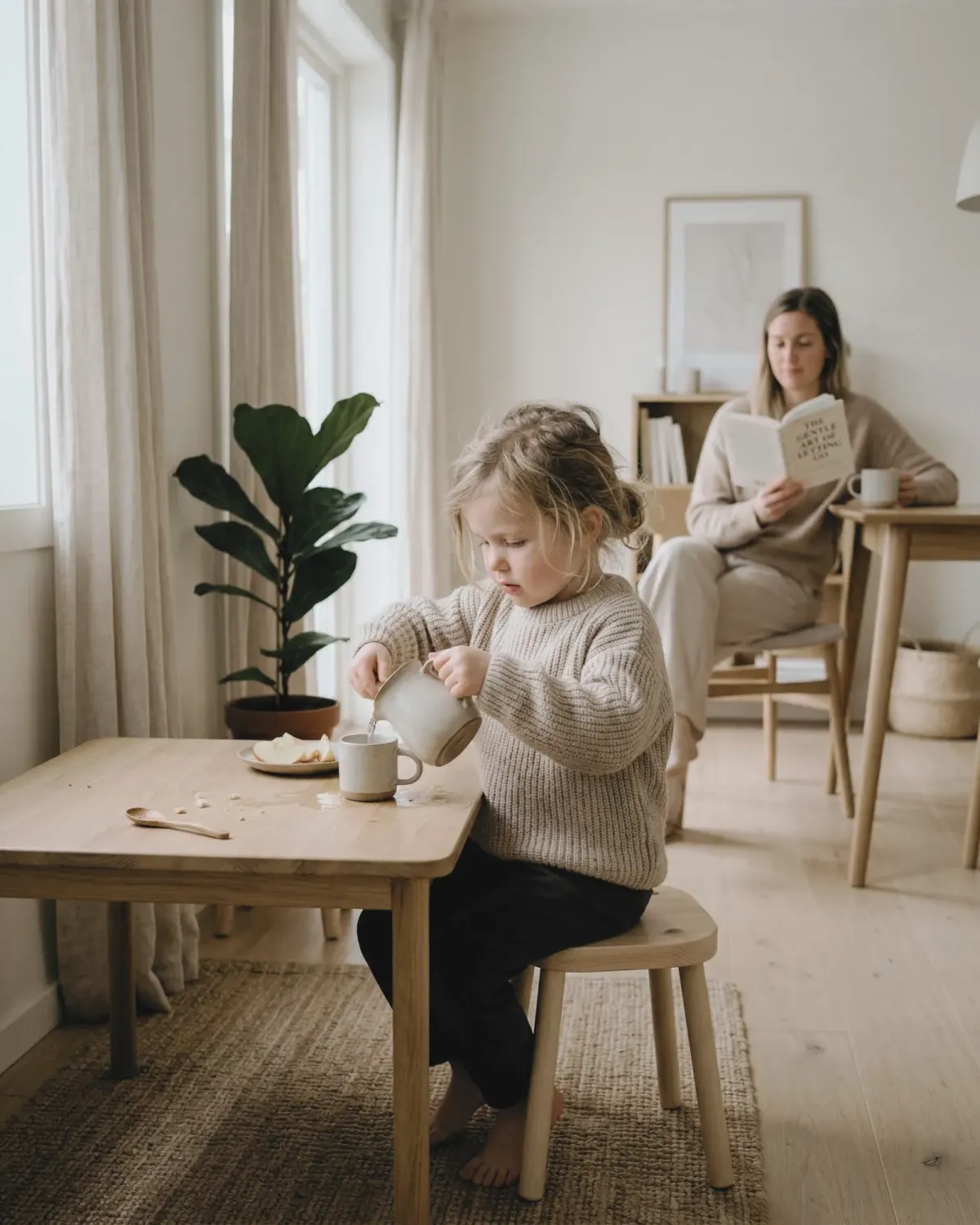
The role of everyday moments
Independence is not built in big, dramatic situations. It grows in ordinary daily life:
- Getting dressed: The child fumbles, struggles, tries again — and gradually does more independently.
- Preparing for school: Instead of everything being organized for them, the child begins remembering and managing parts of the process.
- Homework: The child is allowed to think, attempt and make mistakes before receiving help.
- Tidying up: Effort matters more than perfection. Participation matters more than efficiency.
- Emotional frustration: The child experiences manageable frustration without immediate rescue, while the adult stays present and supportive.
These moments may feel small. But they accumulate. And accumulation is what builds independence.
How to know when to help — and when to step back
A powerful question is: Is my child unable — or simply uncomfortable? Independence grows when children are allowed to stay inside manageable discomfort long enough to build capability.
Step in more when:
- The situation is unsafe.
- The task is truly beyond the child’s developmental ability.
- The child is overwhelmed beyond what they can manage.
Step back more when:
- The task is hard but possible.
- The child is frustrated but still engaged.
- The process is slow or imperfect.
- The child can attempt, even if not succeed perfectly.
What parents often misunderstand
"If I step back, I’m being unsupportive"
Not necessarily. Support does not require takeover. Often, the most supportive thing is to stay present without replacing the child’s effort.
"It’s kinder to make things easier"
Sometimes. But not always. Making things easier in the moment can make independence harder later.
"My child struggles quickly, so I should help fast"
Quick frustration does not always mean incapability. Sometimes it means the child needs more practice staying in effort.
"It’s just faster if I do it"
Yes. But speed is not the goal of development. Capability is. Independence is not about doing less for your child. It is about doing things differently: staying close, allowing effort, and tolerating imperfection.
Want to understand how independence is developing in your family?
Most families do not lack care. They lack clarity around patterns. Once those patterns become visible, small shifts can create powerful changes over time.
Take the 2-minute Scandinavian Parenting Assessment to identify the pattern shaping your child’s confidence, responsibility and independence — and where a small shift could create a meaningful change.
Take the 2-Minute Assessment