
In one clear definition
Many loving parents step in too quickly. They help, fix, guide, soften, explain and rescue — often with the best intentions. But confidence is not built only through comfort. It is built through supported experiences of effort, frustration, recovery and growing capability.
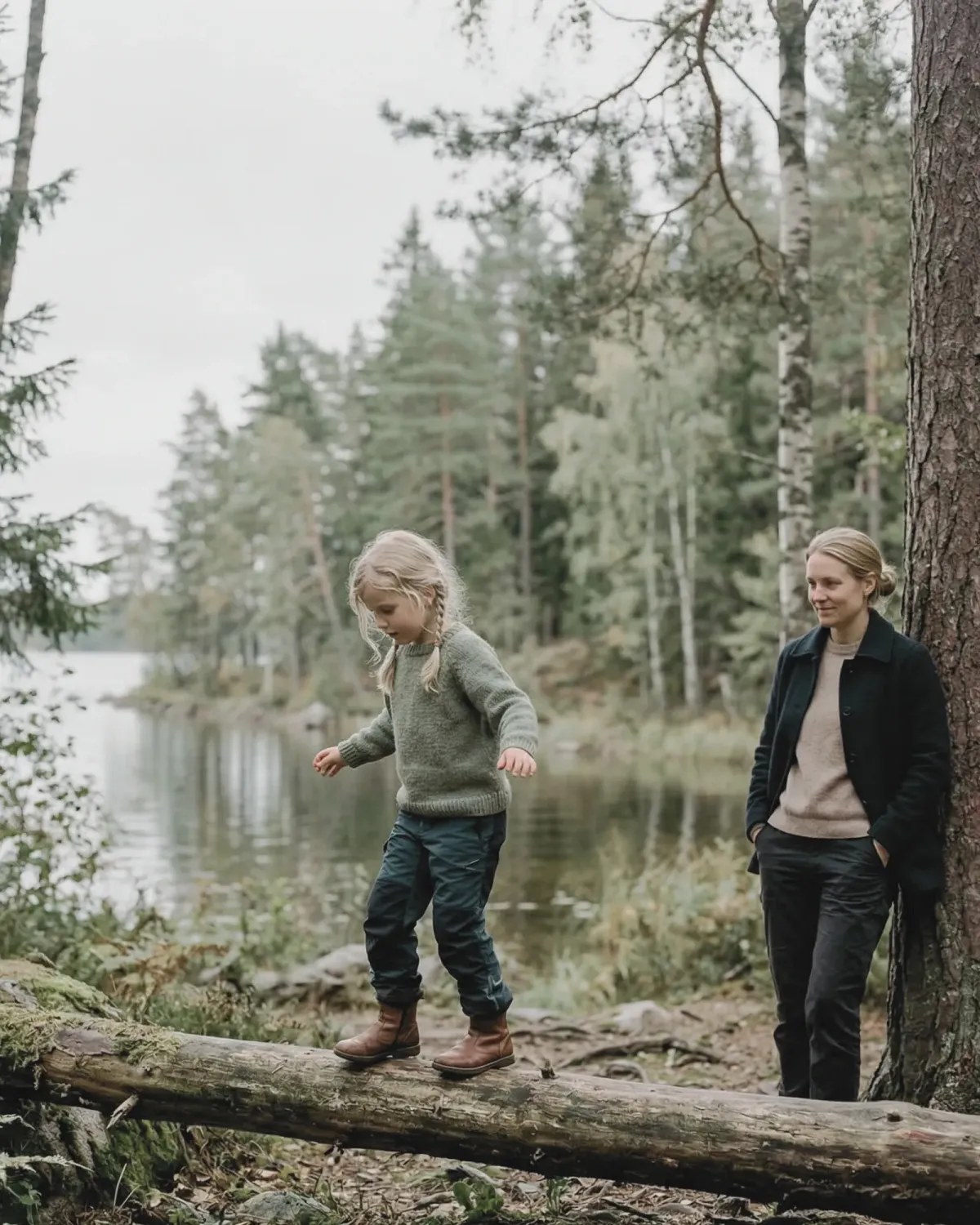
Safe struggle means allowing children to experience manageable difficulty while staying emotionally supported — without stepping in too quickly to remove effort, frustration or responsibility.
It is:
- Support without over-rescue.
- Presence without takeover.
- Guidance without replacing the child’s effort.
The goal is not to make things easy. The goal is to help the child become capable.
Why this is so hard for parents
Most parents do not overhelp because they are careless. They overhelp because they care. It is difficult to watch your child struggle. It is uncomfortable to see frustration, hesitation, failure or effort that does not immediately succeed.
So the adult steps in to help them do it faster, to help them feel better, to reduce tension, to avoid a meltdown, or simply to keep things moving. This impulse is deeply human. But there is an important question underneath it:
"Am I helping because my child truly cannot do this — or because it is hard for me to watch them try? For many parents, the hardest part of safe struggle is not the child’s discomfort. It is their own."
What children actually build through safe struggle
When children are allowed to stay inside manageable challenge, something important begins to grow. Not instantly. Not perfectly. But consistently over time, they begin to learn:
- Frustration is survivable.
- Effort matters.
- I can keep going even when something is hard.
- I don’t need immediate rescue to move forward.
- I can recover after mistakes.
- I can solve things step by step.
This is where real confidence begins. Not from being told "you can do it," but from discovering, again and again: "I did it." Confidence built this way is quieter — but much more stable.
Why overhelping quietly undermines confidence
Many parents want their children to feel confident. But confidence does not grow primarily from praise, reassurance or protection from discomfort. It grows from lived experience.
When a child is repeatedly rescued before effort becomes mastery, something subtle happens. The child relies more on the adult, waits for help earlier, avoids effort more quickly, doubts their own capability, and associates difficulty with stopping. Nothing dramatic or visible right away. But over time, capability does not fully consolidate, and confidence remains fragile.
This is not because the parent did something wrong. It is because help arrived too early, too often.
The difference between support and over-rescue
This is one of the most important distinctions to understand. Support keeps the child inside the experience. Over-rescue removes the child from it. And that difference changes what the child learns.
Support sounds like:
- "I’m here if you need me."
- "Try first. I’ll help if it gets too hard."
- "Take your time."
- "You can feel frustrated and still keep going."
Over-rescue sounds like:
- "Here, let me do it."
- "It’s too hard for you."
- "Let’s just get this over with."
- "I’ll fix it so you don’t struggle."
What safe struggle looks like in real life
Safe struggle is not abstract. It shows up in ordinary, everyday moments:
- Getting dressed: The child struggles with buttons or sleeves. Instead of stepping in immediately, the parent waits, watches, and supports if needed — but does not take over too quickly.
- Learning something new: Whether it’s riding a bike, writing, building or trying a new activity — the child experiences effort, wobble, mistakes and retries. The adult stays nearby, but does not remove the process.
- Homework or tasks: Instead of correcting every mistake or guiding every step, the parent allows space for thinking, trying and even getting it wrong before stepping in.
- Losing a game: Instead of immediately distracting or softening the loss, the adult allows the child to feel disappointment — while staying emotionally present.
These are small moments. But they are where capability grows.
How to know when to step in
This is the question most parents are really asking. Not "Should I help?" but "When should I help?" The key difference is this: Is this too much — or just hard? Safe struggle lives inside "just hard."
Step in when:
- The situation is unsafe.
- The task is clearly beyond your child’s developmental ability.
- The child is overwhelmed beyond what they can regulate even with support.
Pause before stepping in when:
- The situation is safe.
- The task is within reach, even if slow or imperfect.
- The child is frustrated but still engaged.
- The difficulty is uncomfortable, not harmful.
The part most parents don’t expect
One of the most important shifts in safe struggle is not in the child. It is in the parent. It requires the adult to pause before stepping in, tolerate some discomfort, trust the child a little earlier, and allow imperfection, time, and effort.
This can feel unfamiliar at first. But over time, something changes: the child relies less on constant input, the parent carries less invisible load, routines become more shared, and family life becomes less reactive.
Common questions about safe struggle
Is safe struggle the same as letting a child struggle alone?
No. Safe struggle always includes the presence of a supportive adult. The difference is not between presence and absence. It is between support and takeover.
Is safe struggle too harsh?
No. Harshness removes emotional safety. Safe struggle keeps it. The child is not left alone with difficulty. They are allowed to experience difficulty with support nearby.
At what age does safe struggle begin?
From very early on — but always adjusted to the child’s developmental stage. For younger children, it may mean small pauses before helping. For older children, it may mean more responsibility, more follow-through and more ownership of tasks. The principle stays the same. Only the level changes.
Can safe struggle help build independence?
Yes. Because independence does not come from being told what to do or from being constantly helped. It comes from doing, trying, failing, retrying, completing, and contributing. Safe struggle creates space for that process.
Want to understand how this shows up in your family?
Take the 2-minute Scandinavian Parenting Assessment to identify the pattern shaping your child’s confidence, resilience and independence — and where a small shift could create meaningful change.
Take the 2-Minute Assessment